Ant Exterminator & Control in Charleston, WV
In Kanawha City basements and South Hills kitchens, ants follow damp foundations and small wall openings. One phone call sorts out the right Charleston treatment.
Plan
The right visit for the job
For Charleston homes on steep lots or floodplain ground, an ant inspection or targeted treatment usually fits first. The technician matches the visit to trails, entry points, and exterior activity.
Quote
A straight quote
The exact quote is given on the call, based on treatment type, property size, access, materials, and time on site.
Time
A visit time
The visit time is set on the call around access, occupants, pets, and the condition of the Charleston property.
Ant work in Charleston changes with the property. South Hills and Edgewood homes can have steep exterior approaches, while Kanawha City and West Side properties may have basements or crawl spaces near flood-prone valley soils. Downtown restaurants, apartment buildings, and homes along the Kanawha River need different routes checked.
Services
Ant Exterminator & Control Services in Charleston
Charleston properties give ants several ways inside. Humid summers support activity around kitchens, utility rooms, foundations, and shaded yards, while heavy Appalachian rain can move colonies toward walls and slabs. Steep South Hills access, older Kanawha City housing, valley basements, and commercial spaces downtown all affect where trails are traced and which exterior areas can be treated.
Residential ant treatment
Homes in South Hills, Edgewood, and Kanawha City may need interior trail tracing plus treatment around foundations, doors, and utility penetrations.
Kitchen ant control
Kitchen treatment follows trails around sinks, cabinets, plumbing openings, and stored food areas in Charleston homes and apartment units.
Indoor ant trail treatment
Visible trails in Charleston bedrooms, basements, or utility rooms are traced back toward entry points before accessible areas are treated.
Exterior perimeter ant control
Perimeter work around Charleston foundations checks door thresholds, wall joints, shaded mulch, and rain affected sections beside the home.
Yard and foundation ant control
Steep yards in South Hills and wet ground near the Kanawha River can require careful treatment around foundation edges and exterior routes.
Multi-unit ant control
Charleston apartment work separates units, shared walls, utility routes, and common areas so activity is not treated as one isolated room.
Commercial ant control
Restaurants and offices near downtown Charleston need selected areas reviewed, including kitchens, delivery access, storage, and exterior service doors.
Sizes
Ant Exterminator & Control Options Available in Charleston
Most Charleston residential jobs begin with an ant inspection or targeted treatment. That approach suits a kitchen trail, basement activity, or foundation issue without assuming the entire property needs a larger service. Broader activity, repeated entry, or a business site may fit a whole-home, recurring, or commercial plan.
| Size | Dimensions | Good for |
|---|---|---|
| Ant Inspection | A technician traces ant activity, identifies likely entry points, and checks interior and exterior conditions. | An ant inspection fits a Charleston homeowner who sees scattered activity in a kitchen, basement, or crawl space but has not found the entry route. |
| Targeted Ant Treatment | A technician treats visible trails, entry points, and accessible areas where ant activity is concentrated. | A targeted treatment suits a concentrated trail around a South Hills doorway, Kanawha City kitchen, foundation crack, or accessible exterior area. |
| Whole Home Ant Treatment | A coordinated service addresses common indoor ant routes and exterior areas around a residence. | A whole-home treatment fits recurring activity across rooms, utility spaces, and exterior routes, especially where rain and damp soil affect several sides of a Charleston property. |
| Recurring Ant Control | Scheduled visits monitor activity and maintain exterior protection against recurring ant entry. | Recurring control suits a Charleston residence or property with repeated seasonal entry, difficult exterior access, or ongoing activity around foundations and yards. |
| Commercial Ant Control | A service plan treats ant activity across selected areas of a business, facility, or multi-unit property. | Commercial control fits Charleston restaurants, offices, apartment properties, and facilities needing selected areas treated across kitchens, storage, shared spaces, or service entrances. |
Which option fits common Charleston projects
| Project | Size | Why |
|---|---|---|
| Kitchen trail | targeted treatment | A concentrated trail near sinks, cabinets, or plumbing openings usually needs focused treatment and entry point review. |
| Basement activity | whole-home treatment | Basement activity can connect with utility routes and exterior foundation conditions, so several areas may need coordinated attention. |
| Steep yard entry | targeted treatment | A visible route along a steep South Hills foundation can be handled by tracing and treating accessible exterior activity. |
| Recurring spring ants | recurring control | Repeated seasonal entry after rain may fit scheduled monitoring and exterior protection rather than isolated treatment. |
| Restaurant infestation | commercial control | A Charleston restaurant may need selected kitchen, storage, delivery, and exterior service areas addressed as one operating site. |
Schedule Charleston ant treatment
Click Here to Call (888) 510-9023Cost
What Affects Ant Exterminator & Control Cost in Charleston
The exact quote is given on the call after the property and ant activity are described. Cost depends on the treatment type, size of the area, number of activity points, access, time on site, distance from Charleston, and parts or materials needed.
To avoid surprise charges, describe every active area, access limitation, pet concern, and prior treatment on the call. Ask what changes the quote before the visit is scheduled.
Treatment scope
A kitchen trail, foundation route, whole-home issue, recurring plan, and commercial property require different work areas and time on site.
Property access
Steep South Hills approaches, narrow side yards, basements, crawl spaces, and floodplain properties can change how the technician reaches affected areas.
Parts and materials
Treatment materials and any needed application parts depend on the ant activity, surfaces, entry points, and the areas that can be safely accessed.
Distance and timing
Distance from Charleston, after-hours work, property layout, and access around occupied rooms or operating businesses can affect the quote.
What goes in
Types of Work We Handle
Indoor Ant Trails
Indoor trails include activity around Charleston kitchens, bathrooms, basements, utility rooms, and wall openings. Describe where the ants appear and whether trails return after cleaning.
Foundation Ant Activity
Foundation activity can occur beside wet valley soils, shaded walls, crawl space vents, and steep yards. Share the side of the home and any visible route.
Commercial Ant Infestations
Commercial infestations may involve a Charleston restaurant kitchen, apartment common area, office storage room, or service entrance. Identify operating hours and affected sections.
Not accepted
The service does not cover unrelated pests, concealed damage repairs, inaccessible areas, or hazardous materials that cannot be safely handled during treatment.
How to protect your home in Charleston
Trace the trail
Note where ants begin, where they travel, and whether the route changes after rain or cleaning.
Clear the counters
Move loose food and small items from active kitchen areas so trails and entry points can be examined.
Secure your pets
Keep pets away from the work area and mention their presence before the treatment plan is set.
Check the basement
Look near utility penetrations, windows, drains, and foundation walls before describing the problem.
Mention prior treatment
Share products, dates, and areas previously treated so the technician can plan around existing conditions.
Projects
Ant Exterminator & Control for Different Projects
Residential Ant Exterminator & Control
Charleston homes in South Hills, Edgewood, and Kanawha City may need interior trail work paired with foundation and yard inspection.
Kitchen Ant Exterminator & Control
Kitchen treatment addresses trails near sinks, cabinets, plumbing, and food storage in Charleston houses, apartments, and older valley homes.
Foundation Ant Exterminator & Control
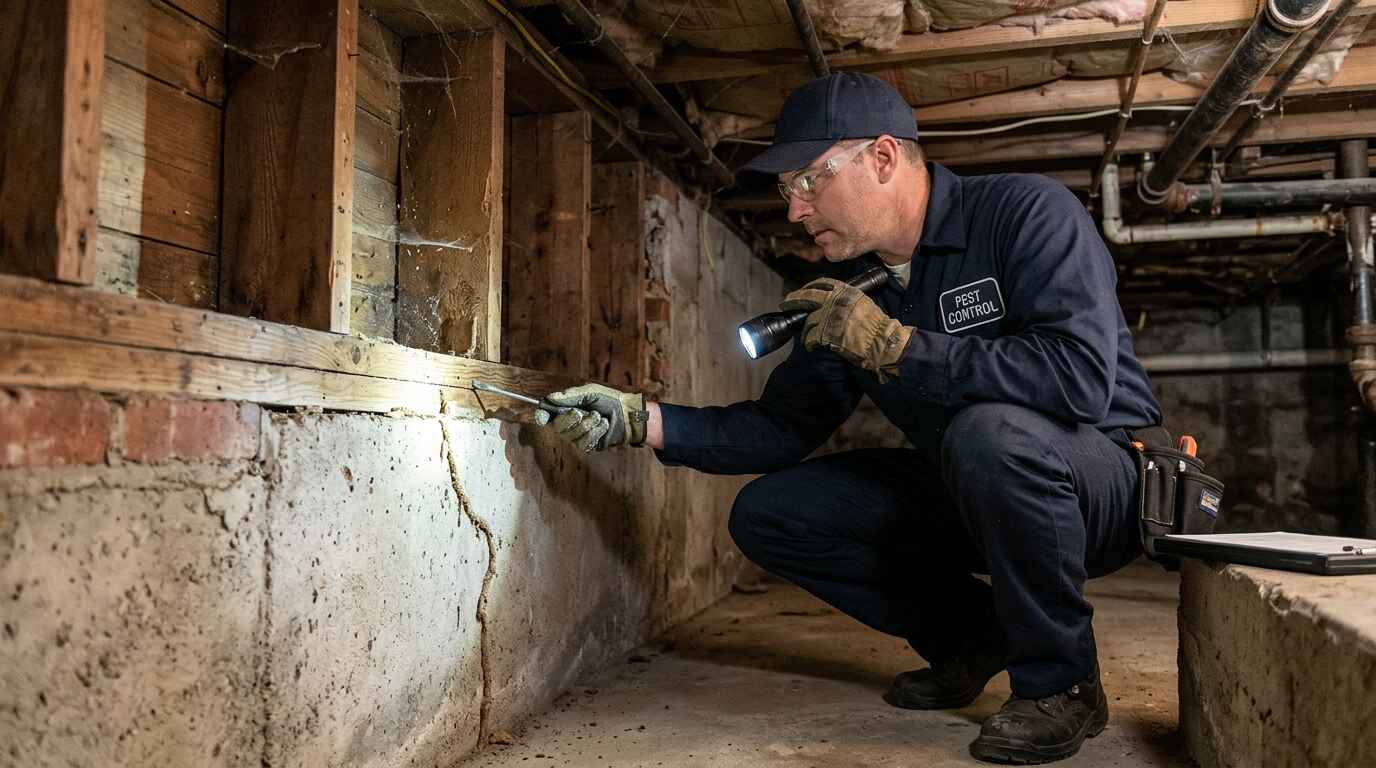
Foundation work follows activity along walls, vents, doors, and crawl spaces, including properties exposed to wet Kanawha County soil.
Yard Ant Exterminator & Control
Yard treatment examines exterior trails around slopes, mulch, steps, and foundation edges where Charleston rain can redirect ant movement.
Apartment Ant Exterminator & Control
Charleston apartment control checks units, shared walls, utility routes, and common areas instead of treating one visible room alone.
Restaurant Ant Exterminator & Control
Restaurant work focuses on Charleston kitchens, storage, delivery entrances, waste areas, and other selected sections that support daily operations.
Commercial Ant Exterminator & Control
Commercial control serves offices, facilities, and multi-unit properties across Charleston and Kanawha County with areas selected during the treatment plan.
How it works
How Ant Exterminator & Control Works in Charleston
Call About Ant Activity
A real person answers by phone around the clock. Describe the Charleston property, ant location, and whether activity is indoors, outdoors, or both.
Describe The Problem
Share the rooms, foundation sides, trail pattern, property access, pets, prior treatment, and any rain or seasonal changes you have noticed.
Review The Treatment Plan
The technician matches the activity to an inspection, targeted, whole-home, recurring, or commercial treatment and explains what areas need access.
Schedule Ant Control
Once the plan is understood, the visit time is set around the property, occupants, pets, business activity, and available work areas.
Weather in Charleston
Charleston humidity can keep ant activity active through summer, while heavy Appalachian rain may redirect colonies toward walls, slabs, and basements. Winter freezes can reduce visible movement without removing entry conditions. Wet ground, runoff, and steep slopes may affect which exterior areas are reachable and how the treatment is planned.
Treatment area access
Work may take place around kitchen plumbing, utility rooms, crawl spaces, slabs, basement walls, doors, foundation vents, and yards. Charleston slopes, narrow side access, floodplain moisture, stored belongings, locked rooms, and operating businesses can limit the areas available for inspection or treatment.
Permits
Ant Exterminator & Control Permits and Placement Rules in Charleston
Access rules
Ant treatment at a private property generally does not involve street work. If equipment, access, or a placement issue requires local review, the City of Charleston or Kanawha County can identify the responsible authority. The phone discussion covers whether an inspection or approval applies and who arranges it.
Landlord and HOA requirements
Some Charleston and Kanawha County neighborhoods, apartment communities, and planned developments have covenants about exterior applications, access, or landlord approval. Tenants should check the lease, and owners should confirm any association rule before exterior treatment.
What the treatment area needs
Clear the route to active rooms, foundation walls, crawl spaces, utility areas, and shutoffs. Provide parking for the work vehicle where possible, keep people and pets away, and mention wet ground, steep slopes, flooding, or frozen surfaces.
Timing
Seasons, Weather and the Best Time to Call in Charleston
Charleston ant activity commonly increases during humid summer weather and after periods of heavy rain, when colonies seek drier routes through foundations and wall openings. Spring thaw can expose exterior activity, while winter freezes may shift ants indoors. Kitchens, basements, and utility rooms deserve attention when outdoor conditions change.
Rain and summer activity
Heavy Appalachian rain and humid Charleston summers can push ants toward doors, slabs, crawl spaces, and kitchens. Exterior access may be limited by saturated ground or runoff on steep lots.
Winter indoor routes
Winter freezes can reduce outdoor movement while ants remain noticeable indoors near heat, plumbing, stored food, or utility rooms. Basements and foundation openings should be described during the call.
Discuss ants at your Charleston home
Click Here to Call (888) 510-9023Service area
Ant Exterminator & Control Areas We Serve
Service covers Charleston neighborhoods and settings including South Hills, Edgewood, Kanawha City, the West Side, downtown, and river valley properties. Work can also be discussed for nearby Kanawha County locations and surrounding communities, with distance and access reviewed on the call.
Charleston is part of our Kanawha County coverage, and we also serve the neighboring communities below.
Why us
Why Call an Ant Exterminator & Control in Charleston?
Charleston's river valley and steep hillside neighborhoods put very different pressures on ant control. A basement near flood-prone ground needs a different inspection path than a South Hills home with a long, sloped foundation and limited side access.
Older homes, apartments, restaurants, and commercial spaces around downtown and Kanawha City often share walls, utility routes, or busy service entrances. Treatment is planned around the actual trail and the parts of the property that can be reached safely.
FAQs
Ant Exterminator & Control FAQs
How much does ant control cost in Charleston?
The exact quote is given on the call after the treatment type, property size, activity areas, access, distance, time on site, and materials are reviewed. A kitchen trail and a commercial infestation are not scoped the same way, especially when Charleston basements or steep exterior areas are involved.
Which Charleston ant treatment do I need?
An ant inspection or targeted treatment fits many first visits for a single trail or entry point. Whole-home treatment, recurring control, or commercial control may fit broader or repeated activity. The technician uses the rooms, foundation areas, property type, and trail pattern to select the service.
How soon can ant control come to my Charleston property?
The visit time is set by phone after the property and access needs are discussed. Availability, the treatment type, business activity, pets, and conditions on steep or wet ground can affect scheduling, so same-day or next-day availability should be asked about directly.
What does Charleston ant treatment cover?
Treatment can address visible indoor trails, likely entry points, accessible concentrated areas, exterior foundation routes, yards, whole-home routes, recurring exterior activity, or selected commercial areas. The planned scope depends on the tier selected and the conditions found at the property.
What does ant control not cover?
Ant control does not cover unrelated pests, concealed damage repairs, inaccessible areas, or hazardous materials that cannot be safely handled. Structural openings, moisture problems, and other building repairs are separate matters and should be described so the treatment plan is not overstated.
Does ant treatment in Charleston need a permit or inspection?
Most private ant treatments do not involve street work or a local permit, but unusual access or placement questions may require direction from the City of Charleston or Kanawha County. The phone discussion covers whether an inspection or approval applies and who handles it.
Do I need to leave my Charleston home during treatment?
The technician explains access and occupancy needs for the selected treatment. Keep people and pets clear of active work areas, unlock rooms and gates, and mention children, animals, tenants, or sensitive occupants before the visit is scheduled.
What should I have ready when calling about Charleston ants?
Have the property address, rooms or exterior sides affected, trail location, recent weather pattern, prior products used, pets, access limits, and preferred visit details ready. Photos can help describe a steep foundation, basement route, or wet yard, though booking is by phone.
Does Charleston rain affect ant control?
Heavy Appalachian rain can redirect ants toward foundations, doors, slabs, and basements, while saturated ground can limit exterior access. Humidity also supports activity. Describe recent rain, runoff, flooding, and the areas where trails appeared so the visit can be planned accurately.
Can Charleston river valley homes get foundation ant control?
Yes, river valley homes can be reviewed for activity around foundations, crawl spaces, basement walls, vents, and utility penetrations. Flood-prone soils, damp conditions, and limited access may change the treatment scope, so identify the affected side of the home during the call.