Termite Control in Milwaukee, WI
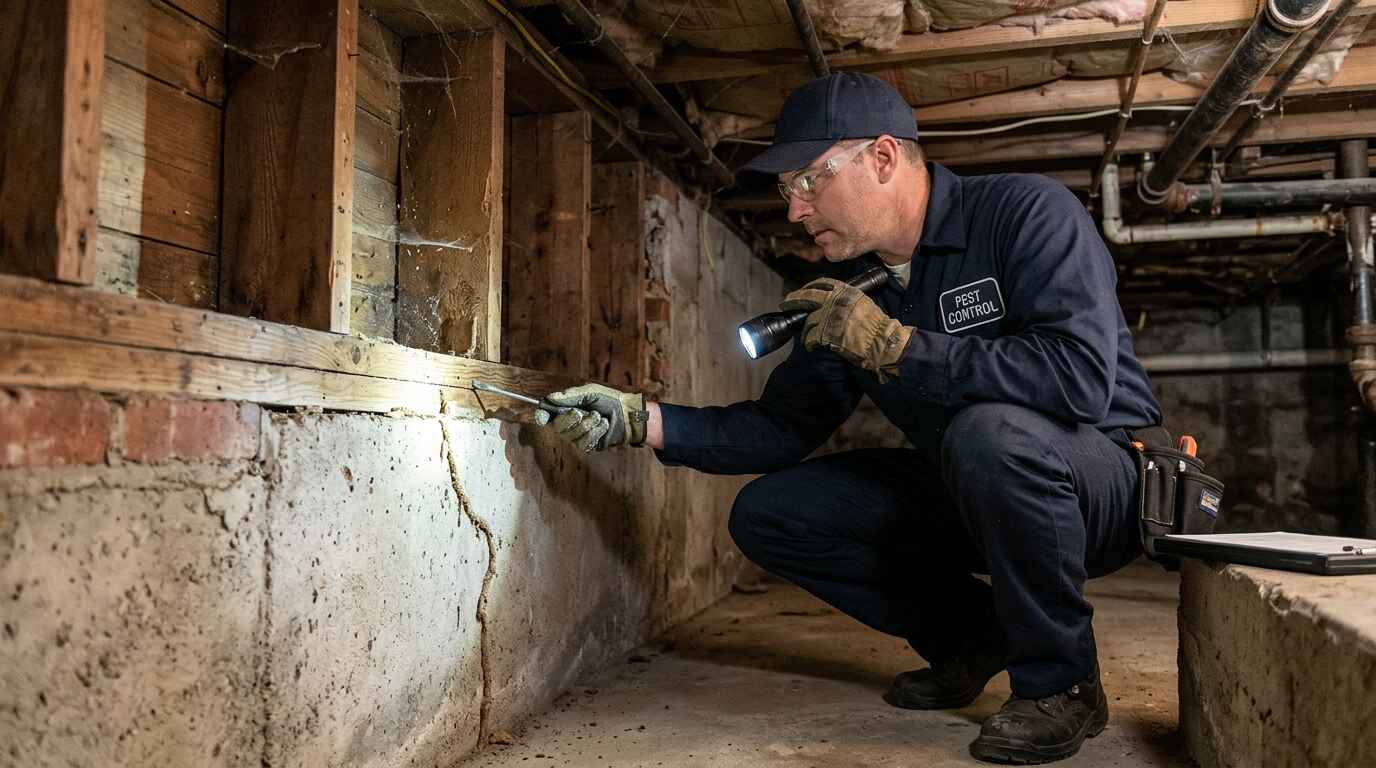
A duplex in Bay View can hide termite activity behind shared masonry and older basement walls. One phone conversation sorts the inspection, treatment type, access questions, and visit time.
Plan
The right visit for the job
Older Milwaukee duplexes, bungalows, and attached homes commonly start with a termite inspection, then move to targeted treatment when activity and entry areas are confirmed.
Quote
A straight quote
The quote is given on the call and changes with treatment scope, access, materials, time on site, and distance.
Time
A visit time
The visit time is set on the call around access to the home, occupants, pets, and work areas.
From Bay View bungalows and Riverwest duplexes to Sherman Park homes, downtown apartments, and Milwaukee County commercial buildings, termite work must account for older foundations, shared walls, basements, crawl spaces, and tight side yards.
Services
Termite Control Services in Milwaukee
Milwaukee housing often places wood framing close to masonry, soil, basements, and narrow side access. Older duplexes in Bay View, Riverwest, and Washington Heights may share walls or utility paths, while commercial buildings downtown need work planned around occupants. The treatment starts with accessible areas, evidence of activity, moisture conditions, and likely entry routes.
Residential termite control
Treatment for Milwaukee bungalows, duplexes, and older detached homes, with attention to basements, masonry joints, porch structures, and shared wall conditions.
Termite inspection
An inspection examines accessible Milwaukee crawl spaces, basements, slabs, wood framing, and exterior foundation edges for activity and conducive conditions.
Wood-destroying insect report
A report documents visible wood damage and insect evidence for Milwaukee home transactions, renovations, or property records without guessing about concealed areas.
Preventive termite treatment
Preventive work helps protect Milwaukee properties where soil, wood contact, damp basements, or older foundation details create recurring entry opportunities.
Subterranean termite treatment
Subterranean termite treatment follows activity near soil, foundation cracks, slabs, and basement walls common in Milwaukee homes and attached properties.
Commercial termite control
Milwaukee offices, storefronts, warehouses, and apartment buildings need treatment planned around tenants, deliveries, shared masonry, and restricted utility areas.
Termite damage assessment
A damage assessment separates visible termite impact from moisture or age-related deterioration in Milwaukee basements, porches, framing, and finished rooms.
Sizes
Termite Control Options Available in Milwaukee
The most common Milwaukee job begins with an inspection because older homes, shared masonry walls, and finished basements can conceal the route. A targeted treatment often fits confirmed activity, while whole-home treatment suits broader activity around the structure.
| Size | Dimensions | Good for |
|---|---|---|
| Termite Inspection | A technician examines accessible areas for termites, conducive conditions, and evidence of damage. | This fits a Bay View bungalow, Riverwest duplex, or Milwaukee County property with suspected activity but no confirmed treatment area. Accessible foundations, basements, crawl spaces, and wood are examined. |
| Targeted Treatment | Treatment focuses on identified activity and accessible entry or nesting areas. | This fits confirmed activity at a foundation edge, porch, basement wall, or shared masonry area in Milwaukee. Treatment focuses on identified activity and accessible entry or nesting areas. |
| Whole-Home Treatment | A coordinated treatment addresses active termite activity around the structure and likely entry routes. | This fits a larger Milwaukee home, attached property, or commercial structure where activity reaches multiple sides or likely routes. The work addresses active activity around the structure in a coordinated plan. |
Which option fits common Milwaukee projects
| Project | Size | Why |
|---|---|---|
| Older bungalow | inspection | Basements, porch supports, and aging foundation joints can show different conditions, so accessible areas should be examined before treatment is chosen. |
| Bay View duplex | targeted treatment | Confirmed activity near a shared masonry wall or basement entry often calls for focused work rather than treating unrelated areas. |
| Riverwest rental | whole-home treatment | Attached construction, tenant spaces, and multiple foundation sides can create connected routes that need a coordinated treatment plan. |
| Commercial storefront | inspection | Finished walls, utility penetrations, and neighboring units can limit visibility, making an inspection the sensible first visit. |
| Basement wood damage | targeted treatment | Visible damage near a Milwaukee foundation can fit focused treatment after activity and accessible entry points are identified. |
Schedule Milwaukee termite treatment
Click Here to Call (888) 510-9023Cost
What Affects Termite Control Cost in Milwaukee
The exact quote is given on the call after the job is described. Cost depends on the type and size of the structure, active areas, parts and materials, time on site, access through basements or shared walls, distance from Milwaukee, and after-hours work.
To avoid surprise charges, describe the structure, visible evidence, access limits, and any prior treatment on the call. The exact quote is given before the visit is set, with the work scope discussed plainly.
Structure and activity
A detached home, duplex, apartment building, or commercial space changes the treatment scope, especially when activity is found on multiple sides or near shared masonry.
Access from Milwaukee
Distance, parking, narrow side yards, locked utility rooms, crawl-space openings, and finished basements affect how the work area can be reached and prepared.
Materials and parts
Treatment materials and any needed application equipment depend on the structure, identified entry routes, soil contact, foundation details, and accessible nesting areas.
Time on site
Inspection findings, preparation, tenant coordination, after-hours work, and the number of accessible treatment areas affect the time required at a Milwaukee property.
What goes in
Types of Work We Handle
Active Termite Infestations
This covers confirmed or suspected activity in Milwaukee homes, duplexes, apartments, and commercial structures, including foundation edges, basements, crawl spaces, and shared masonry areas.
Preventive Termite Protection
This covers treatment planning for properties with conducive conditions or prior concerns, such as older Milwaukee bungalows with damp basements or wood near soil.
Wood Damage Assessment
This covers visible damage assessment in framing, porches, trim, and basement wood, including a typical Milwaukee load such as an older bungalow renovation.
Not accepted
The service does not cover unrelated plumbing, general demolition, concealed damage that cannot be accessed, or materials and conditions outside the agreed termite treatment scope.
How to protect your home in Milwaukee
Describe the building
Have the property type, age if known, attached-wall details, and affected rooms ready for the Milwaukee booking conversation.
Mark visible evidence
Note mud tubes, damaged wood, wings, or repeated activity and identify where each sign appeared.
Mention prior treatment
Share any earlier termite treatment, inspection, repairs, or moisture work so the plan starts with accurate history.
Check access points
Identify basement doors, crawl-space openings, utility rooms, and locked areas before the technician arrives.
Secure pets and people
Plan to keep occupants and pets clear of the work area while accessible treatment areas are examined and handled.
Projects
Termite Control for Different Projects
Termite Inspection Control
Milwaukee inspections cover accessible foundations, basements, crawl spaces, porch structures, and wood framing in homes from Bay View to Sherman Park.
Subterranean Termite Control
Work focuses on soil, foundation edges, slabs, and basement walls where subterranean activity can enter Milwaukee homes and attached buildings.
Drywood Termite Control
The inspection distinguishes suspected drywood activity from moisture damage or other insects in Milwaukee framing, trim, furniture, and finished rooms.
Preventive Termite Control
Preventive treatment suits Milwaukee properties with wood contact, damp foundation areas, older masonry details, or a history of termite concerns.
Commercial Termite Control
Milwaukee County offices, storefronts, warehouses, and apartments need treatment coordinated around tenants, deliveries, utility rooms, and neighboring spaces.
Termite Damage Control
Damage control begins by separating active termite evidence from old deterioration in Milwaukee basements, porches, framing, and renovation areas.
Termite Barrier Control
Barrier planning addresses likely entry routes around Milwaukee foundations, slabs, shared masonry, utility penetrations, and tight urban side access.
How it works
How Termite Control Works in Milwaukee
Request An Inspection
Describe the Milwaukee property, visible evidence, attached walls, basement or crawl-space access, and any prior treatment during the phone booking.
Identify Termite Activity
The technician examines accessible areas for termites, conducive conditions, entry routes, and evidence of damage around the structure.
Review The Treatment Plan
Treatment options are matched to the activity, structure, access, materials, and areas that can be safely reached.
Protect The Structure
The selected termite treatment addresses identified activity and likely routes, with the work area kept accessible during the visit.
Weather in Milwaukee
Milwaukee winters freeze ground and limit some exterior access, while spring runoff can expose moisture and foundation conditions. Humid summers can increase conducive moisture around older basements and wood. Seasonal conditions are reviewed when setting the visit and choosing accessible treatment areas.
Treatment area access
Work may occur in crawl spaces, basements, slabs, utility rooms, foundation edges, porches, and yards. Dense Milwaukee lots, shared masonry, finished rooms, locked areas, snow, standing water, and narrow side access can limit where equipment and treatment materials are used.
Permits
Termite Control Permits and Placement Rules in Milwaukee
Access rules
Termite treatment at a private Milwaukee property usually concerns access to the structure rather than street work. If equipment, exterior work, or a related repair raises a local approval or inspection question, the City of Milwaukee or Milwaukee County can identify the responsible office. The call covers who needs to arrange it.
Landlord and HOA requirements
Condominium associations, landlords, and neighborhood covenants in Milwaukee County may require notice before exterior treatment, basement access, or work near shared walls. Have the property rules and manager details ready so responsibilities are clear.
What the work area needs
Clear the path to the affected basement, crawl space, slab, utility room, foundation edge, or yard. Provide workable parking for the vehicle, secure pets and people, unlock needed areas, and account for frozen ground, runoff, snow, or standing water.
Timing
Seasons, Weather and the Best Time to Call in Milwaukee
Milwaukee termite concerns often surface during spring thaw and runoff, when moisture and foundation conditions become easier to notice. Humid summers can support conducive conditions around older basements and wood. Freezing winters may restrict exterior access, so the structure, indoor areas, and seasonal work limits are discussed before scheduling.
Spring thaw and runoff
Spring runoff can reveal damp foundation edges, mud tubes, and standing water near older Milwaukee homes. Clear access around basement entries and yards so the inspection can distinguish active routes from seasonal moisture.
Winter access limits
Freezing ground, snow, and packed side yards can restrict exterior treatment around Milwaukee foundations. Indoor basements, crawl spaces, and utility rooms may remain accessible, but the visit plan must account for conditions.
Arrange a Milwaukee termite inspection
Click Here to Call (888) 510-9023Service area
Termite Control Areas We Serve
Coverage includes Milwaukee neighborhoods and corridors such as Bay View, Riverwest, Walker's Point, Sherman Park, Washington Heights, the East Side, the South Side, downtown, and nearby Milwaukee County communities. Dense attached housing, older bungalows, commercial blocks, and shared masonry are included in the service area.
Milwaukee is part of our Milwaukee County coverage, and we also serve the neighboring communities below.
Why us
Why Call a Termite Control in Milwaukee?
Milwaukee's older bungalows, duplexes, and attached buildings often place foundation edges, basement walls, and wood framing close together. Shared masonry and narrow side yards can hide or restrict termite routes, so access planning matters as much as the treatment area.
Bay View, Riverwest, Sherman Park, and downtown properties can differ sharply in basement finish, tenant access, porch construction, and parking. The treatment plan must fit the actual building rather than assuming every Milwaukee property has open exterior access.
FAQs
Termite Control FAQs
How much does termite control cost in Milwaukee?
The quote depends on the structure size and type, activity, accessible treatment areas, materials, time on site, distance, access, and after-hours work. Describe the Milwaukee property, visible evidence, basement or crawl-space conditions, and prior treatment on the call so the exact quote can be given.
Which termite visit fits my Milwaukee home?
A termite inspection fits suspected activity without a confirmed treatment area. Targeted treatment fits identified activity and accessible entry points, while whole-home treatment fits broader activity around a structure. Older Milwaukee duplexes and bungalows commonly begin with an inspection because shared walls and finished basements can conceal routes.
How soon can someone come for termite control in Milwaukee?
The visit time is set on the phone after the property, access, and work area are discussed. Ask about available timing, including same-day or next-day possibilities, but the actual appointment depends on the job and schedule.
What does Milwaukee termite treatment cover?
Treatment addresses identified termite activity and accessible entry or nesting areas around the structure, based on the selected visit type. The plan may involve basements, crawl spaces, slabs, foundation edges, yards, or utility areas when those locations are accessible.
What does termite control not cover?
It does not automatically cover unrelated plumbing, demolition, inaccessible concealed damage, or conditions outside the agreed termite treatment scope. In Milwaukee buildings with shared walls or finished rooms, explain those limits before the visit so the work area is understood.
Does Milwaukee termite treatment need a permit or inspection?
The call reviews whether a local approval or inspection question applies to the planned work. The City of Milwaukee or Milwaukee County identifies the responsible office when needed, and the booking conversation covers who arranges any required step.
How do I prepare my Milwaukee home for termite treatment?
Clear access to the affected basement, crawl space, slab, utility room, foundation edge, or yard. Unlock needed areas, arrange parking, and keep pets and people away from the work area. Mention narrow side yards, shared walls, snow, runoff, or standing water.
What should I have ready when booking Milwaukee termite control?
Have the property type, approximate structure layout, affected rooms, visible signs, attached-wall details, access limits, prior treatment, and any landlord or association rules ready. Photos can help describe evidence, but accessible areas still need examination.
Does Milwaukee weather affect termite treatment?
Yes. Frozen ground, snow, spring runoff, standing water, and humid summer conditions can change exterior access and the areas that can be examined. The visit plan accounts for seasonal conditions, especially around older foundations, basements, crawl spaces, and narrow yards.
Can termite control handle shared walls in Milwaukee duplexes?
Yes, shared walls can be considered during inspection and treatment planning, but access remains specific to each property. In Bay View and Riverwest duplexes, the technician may need to review basement walls, utility paths, foundation edges, and any locked or tenant-occupied areas.