Termite Control in Newaygo, MI
Along the Muskegon River near downtown Newaygo, termite work often means checking a wooded house, crawl space, and detached outbuildings together. One phone call gets the inspection and treatment plan sorted.
Plan
The right visit for the job
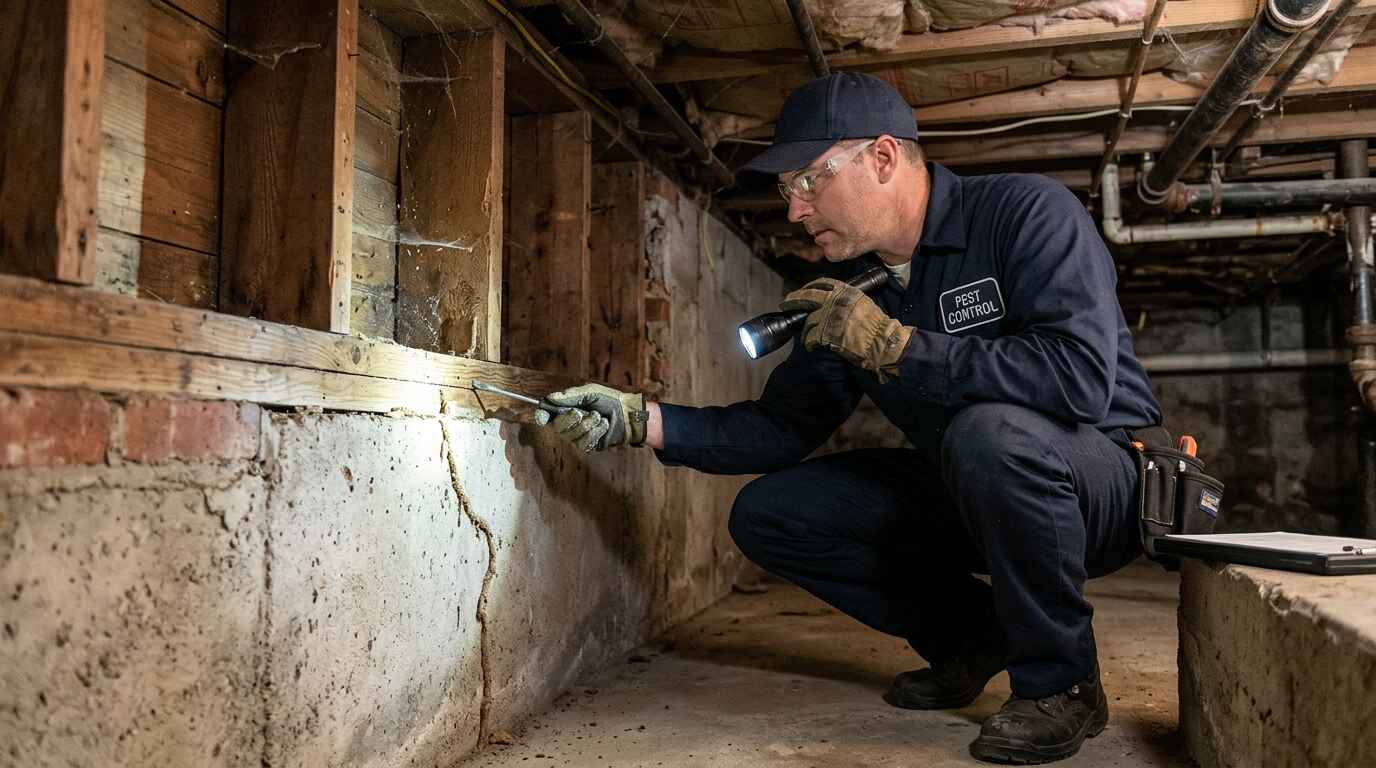
Riverfront houses, rural homes, and properties with detached sheds usually begin with a Termite Inspection, then move to targeted treatment if accessible activity is found.
Quote
A straight quote
The exact quote is given on the call, based on treatment scope, structure size, access, materials, distance, and time on site.
Time
A visit time
The visit time is set on the call around access to the home, crawl space, outbuildings, and seasonal road conditions.
Homes near downtown Newaygo, the Muskegon River, Croton, and the wooded roads through Newaygo County can have different termite access points. We inspect basements, crawl spaces, slabs, porches, and detached outbuildings, then match the termite treatment to the structure and the evidence found.
Services
Termite Control Services in Newaygo
Newaygo properties commonly sit among trees, sandy soil, river ground, and detached garages or sheds. Humid summers can support termite activity around damp structural areas, while spring flooding can change access near the Muskegon River. The work starts with finding activity, moisture conditions, entry routes, and damage before choosing treatment for the home or other structures.
Residential termite control
Residential termite control for Newaygo homes checks the foundation, crawl space, basement, porches, and nearby wood structures for activity and access problems.
Termite inspection
A termite inspection examines accessible areas around Newaygo houses, including sill plates, joists, wall edges, utility penetrations, and detached outbuildings.
Wood-destroying insect report
A wood-destroying insect report documents accessible findings for a Newaygo property, including visible damage, conducive conditions, and areas requiring further review.
Preventive termite treatment
Preventive termite treatment suits Newaygo homes bordered by woods, sandy soil, or older detached structures where reducing likely entry routes matters.
Subterranean termite treatment
Subterranean termite treatment focuses on soil-to-structure routes, foundation edges, crawl spaces, and other accessible areas around Newaygo river and woodland properties.
Commercial termite control
Commercial termite control serves Newaygo offices, shops, rental buildings, and storage areas where multiple rooms, additions, and utility penetrations need coordinated inspection.
Termite damage assessment
Termite damage assessment helps Newaygo owners separate active activity from old damage before repairs, treatment planning, or evaluation of an outbuilding.
Sizes
Termite Control Options Available in Newaygo
The most common Newaygo job starts with an inspection because rural homes often have crawl spaces, porches, additions, and separate outbuildings. A targeted treatment fits identified activity, while a whole-home treatment is considered when activity or entry routes extend around the structure.
| Size | Dimensions | Good for |
|---|---|---|
| Termite Inspection | A technician examines accessible areas for termites, conducive conditions, and evidence of damage. | This fits a Newaygo home with suspected activity, mud tubes, damaged wood, or uncertain conditions around a crawl space, basement, river property, or detached shed. |
| Targeted Treatment | Treatment focuses on identified activity and accessible entry or nesting areas. | This suits identified activity at an accessible foundation edge, porch, utility penetration, crawl space, or outbuilding without evidence requiring a coordinated whole-structure approach. |
| Whole-Home Treatment | A coordinated treatment addresses active termite activity around the structure and likely entry routes. | This fits a Newaygo residence or larger property where activity and likely entry routes involve several sides of the structure, connected additions, and accessible surrounding areas. |
Which option fits common Newaygo projects
| Project | Size | Why |
|---|---|---|
| Riverfront home | whole-home treatment | Moisture, multiple foundation sides, porches, and nearby wood structures can make coordinated treatment more practical. |
| Detached garage | targeted treatment | A separate structure with localized activity may need focused work after its sill, slab edge, and surrounding soil are checked. |
| Rural crawl space | inspection | Limited visibility and sandy soil around a dispersed Newaygo property make accessible inspection the sensible first step. |
| Older farmhouse | whole-home treatment | Additions, basement areas, wood contact, and utility penetrations can create several connected routes that need review together. |
| Commercial storage building | targeted treatment | Known activity near one accessible wall or storage area may be handled directly after the surrounding structure is examined. |
Schedule termite treatment in Newaygo
Click Here to Call (888) 510-9023Cost
What Affects Termite Control Cost in Newaygo
The exact quote is given on the call after discussing the property and suspected activity. Cost depends on the type and size of the structure, treatment area, parts and materials, time on site, access, distance across rural Newaygo County, and after-hours work.
To avoid surprise charges, describe every structure, suspected location, access restriction, and prior treatment during the call. The exact quote is given before the visit is set, with unusual conditions discussed plainly.
Structure and activity
Prices change with the building size, number of affected areas, evidence of active termites, and whether connected additions or outbuildings need review.
Access from Newaygo
Distance and access matter on rural roads, river properties, wooded lots, and sites where a crawl space, foundation edge, or outbuilding is difficult to reach.
Parts and materials
Treatment materials and any needed parts depend on the identified entry route, soil contact, structural layout, and the treatment method selected for the property.
Time on site
The work takes longer when inspection areas are obstructed, activity is spread across several structures, or after-hours service is needed.
What goes in
Types of Work We Handle
Active Termite Infestations
This covers active termite findings in homes, crawl spaces, basements, porches, garages, sheds, and other Newaygo structures where treatment access can be evaluated.
Preventive Termite Protection
This covers planning for homes near wooded lots, sandy soil, river ground, and detached outbuildings where likely entry routes need attention before activity becomes extensive.
Wood Damage Assessment
This covers visible or suspected damage in a Newaygo County farmhouse, cabin, garage, porch, or other wood-framed structure, with active and old damage considered separately.
Not accepted
Termite treatment does not cover unrelated structural rebuilding, concealed damage that cannot be accessed, household waste, or repairs outside the identified pest work.
How to protect your home in Newaygo
Clear the work area
Move stored items away from foundation walls, crawl-space openings, utility rooms, and suspected activity before the visit.
List separate structures
Mention garages, sheds, additions, porches, and detached buildings on the Newaygo property when describing the job.
Keep evidence visible
Leave mud tubes, damaged wood, shed debris, and suspected entry points undisturbed until they can be examined.
Secure pets safely
Keep pets and people away from treatment areas and identify any rooms or structures that cannot be entered.
Gather property details
Have the property location, access instructions, prior treatment information, and signs of activity ready for the call.
Projects
Termite Control for Different Projects
Termite Inspection Control
Newaygo termite inspection control examines accessible foundations, crawl spaces, basements, porches, and outbuildings before a treatment scope is selected.
Subterranean Termite Control
Subterranean termite control in Newaygo follows soil-to-structure routes around foundations, slabs, crawl spaces, and damp areas near wooded or river properties.
Drywood Termite Control
Drywood termite control reviews accessible wood, framing, furniture-like structural elements, and detached buildings in Newaygo when activity is not tied to soil contact.
Preventive Termite Control
Preventive termite control for Newaygo homes considers wooded lots, sandy soil, moisture, wood contact, and entry points around additions and outbuildings.
Commercial Termite Control
Commercial termite control in Newaygo coordinates inspection and treatment across offices, rental buildings, shops, storage spaces, and utility penetrations.
Termite Damage Control
Termite damage control helps Newaygo owners identify active areas, document accessible damage, and separate treatment needs from later carpentry work.
Termite Barrier Control
Termite barrier control reviews foundation edges, slab transitions, soil contact, and likely entry routes around Newaygo residences and detached structures.
How it works
How Termite Control Works in Newaygo
Request An Inspection
Describe the Newaygo property, suspected signs, structure count, access limits, and any prior treatment when requesting the inspection.
Identify Termite Activity
The technician examines accessible wood, soil contact, foundation edges, crawl spaces, utility areas, and evidence that may indicate active termites.
Review The Treatment Plan
The treatment plan explains the identified activity, accessible treatment areas, likely entry routes, materials, and work needed for the property.
Protect The Structure
Treatment addresses the agreed areas, while the property owner keeps access clear and watches for conditions that can support renewed activity.
Weather in Newaygo
Humid Newaygo summers can make damp crawl spaces and shaded foundation edges more supportive of termite activity. Spring flooding may limit access near the Muskegon River, and heavy snow can cover soil contact or outbuilding approaches. Seasonal conditions are reviewed when setting the visit.
Treatment area access
Work may occur in crawl spaces, basements, slab edges, utility rooms, foundation lines, yards, porches, garages, and sheds. Stored items, tight openings, standing water, snow, mud, steep ground, and blocked rural driveways can limit inspection or treatment access.
Permits
Termite Control Permits and Placement Rules in Newaygo
Access rules
Termite treatment on private property generally does not involve a street permit, but unusual work affecting public space or a structure may require review by the City of Newaygo or another local government. The call covers whether that applies and who arranges any required inspection or approval.
Landlord and HOA requirements
Newaygo County properties may have HOA, covenant, subdivision, or landlord rules about treatment access, notices, exterior work, and tenant entry. Check those rules before the visit and share any required notice process during the call.
What the work area needs
Provide clear access to the suspected area, foundation edges, crawl-space openings, utility rooms, and shutoffs. Keep a work vehicle space available, secure pets and people, and account for snow, mud, standing water, or spring flooding around the property.
Timing
Seasons, Weather and the Best Time to Call in Newaygo
Termite questions often increase during warmer, humid periods when activity or damage becomes easier to notice around Newaygo homes. Spring thaw and flooding can expose moisture problems while limiting access, and heavy snow can hide foundation edges and soil contact. Woodland and river properties may need more careful seasonal planning.
Spring thaw and flooding
Wet ground near the Muskegon River and rural roads can restrict access to foundations, crawl spaces, and outbuildings. Report standing water, washed areas, or soft drive approaches when setting the visit.
Humid summer activity
Warm, humid conditions can make activity and moisture damage more noticeable around shaded foundations, porches, and wooded properties. Keep suspected evidence visible and describe every affected structure.
Book a Newaygo termite inspection
Click Here to Call (888) 510-9023Service area
Termite Control Areas We Serve
Service covers downtown Newaygo, homes along the Muskegon River, Croton-area properties, wooded roads, rural homes throughout Newaygo County, and detached structures outside the city center. Nearby service discussions can include Ravenna, Sheridan, Pentwater, Delton, and Kalamazoo when the property details and travel distance are reviewed.
Newaygo is part of our Newaygo County coverage, and we also serve the neighboring communities below.
Why us
Why Call a Termite Control in Newaygo?
Newaygo properties often spread the termite inspection across a main house, porch, garage, shed, and wooded perimeter instead of one compact work area. River ground, sandy soil, and spring water can change where moisture and soil contact are found.
A Newaygo termite treatment needs practical access planning. Snow can cover foundation edges, flood conditions can affect river roads, and rural driveways can separate the home from outbuildings, so the call should cover every structure and approach.
FAQs
Termite Control FAQs
How much does termite control cost in Newaygo?
The exact quote is given on the call and depends on structure size, activity, treatment areas, parts and materials, time on site, access, distance, and after-hours work. Describe the home, outbuildings, suspected signs, and rural approach so the scope is not understated.
Which termite treatment fits my Newaygo home?
A Termite Inspection is the usual starting point when activity or damage is uncertain. Targeted treatment fits identified activity in an accessible area, while whole-home treatment suits activity or entry routes spread around the structure, additions, or connected outbuildings.
How soon can someone come to Newaygo?
The visit time is set on the call because access, seasonal road conditions, and the requested work affect scheduling. Ask about available timing, including same-day or next-day possibilities, and describe whether the property is near the river, in town, or on a rural road.
What does termite treatment cover?
Termite treatment covers the agreed accessible areas where activity, damage, conducive conditions, or likely entry routes are found. Depending on the property, that can include foundation edges, crawl spaces, basements, slabs, porches, utility areas, yards, garages, and sheds.
What does termite treatment not cover?
Termite treatment does not cover unrelated rebuilding, concealed conditions that cannot be accessed, household waste, or repairs outside the identified pest work. Structural carpentry and other property repairs should be discussed separately after the treatment findings are understood.
Do termite treatments in Newaygo need permits or inspections?
Most private termite treatment does not involve a street permit, but unusual work affecting public space or a structure may require local review. The call covers whether the City of Newaygo or another local government is involved and who handles any required approval or inspection.
Do I need to leave my Newaygo home?
Access requirements depend on the treatment areas and materials selected. People and pets may need to stay clear of active work areas, while stored items should be moved from foundation walls, crawl-space openings, utility rooms, garages, and suspected activity.
What should I have ready when calling about termites?
Have the property location, structure count, suspected signs, access instructions, prior treatment details, and any tenant or landlord requirements ready. Mention detached buildings, river access, crawl spaces, basements, snow, standing water, or blocked approaches before the visit is set.
Can Newaygo weather affect termite treatment?
Yes, heavy snow, spring flooding, mud, standing water, and humid conditions can affect visibility, access, and the work area. Tell the technician about river proximity, soft ground, covered foundation edges, and any rural driveway limitations when arranging the visit.
Can you inspect detached buildings near the Muskegon River?
Yes, detached garages, sheds, cabins, and other accessible structures can be included in the inspection and treatment discussion. List each building during the call because distance from the main home, wood contact, moisture, and separate access can change the recommended scope.