Termite Control in Chatham, IL
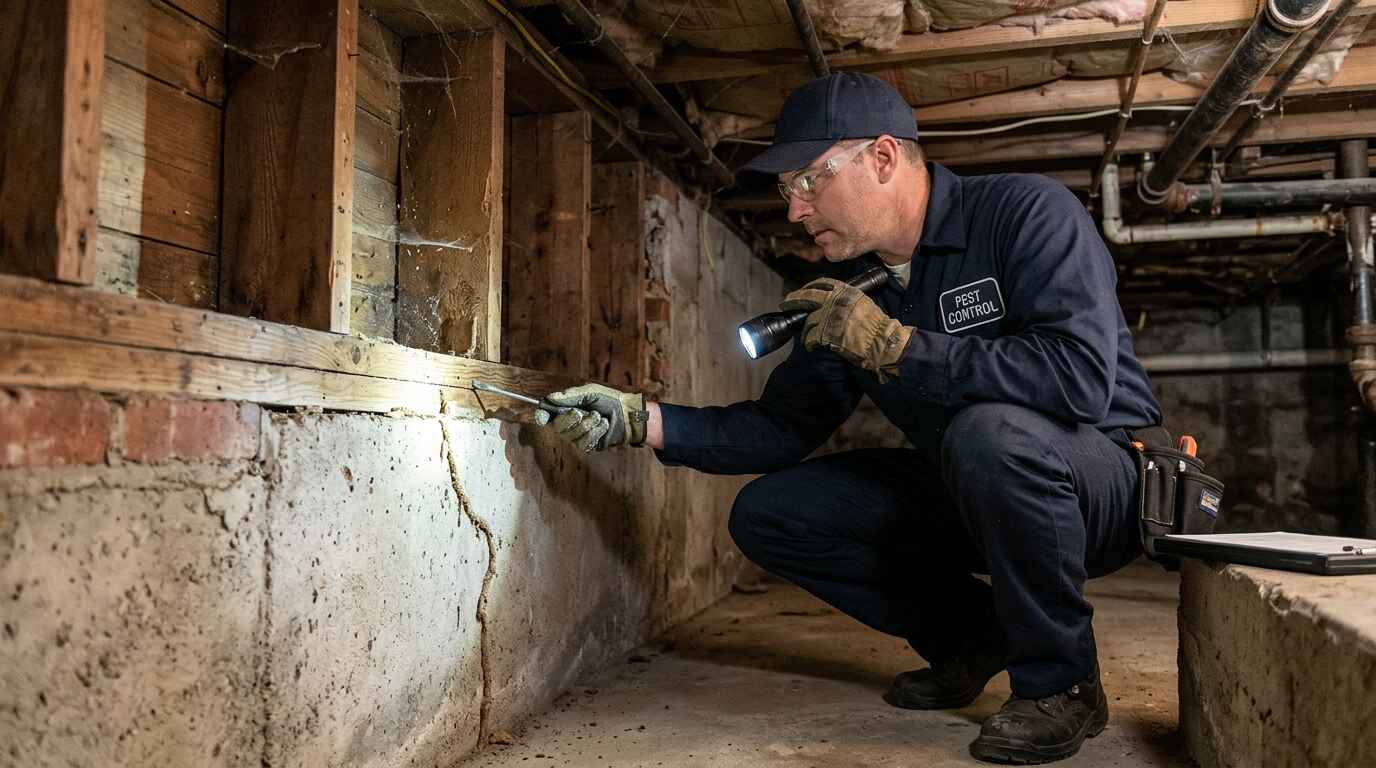
In the Ironwood subdivision, a technician checks sill plates, slab edges, and attached garages for termite activity, then one call gets the treatment plan sorted for your Chatham home.
Plan
The right visit for the job
Newer planned-subdivision homes often start with a termite inspection, while visible activity near a slab, crawl space, or garage may need targeted treatment.
Quote
A straight quote
The quote is given on the call after reviewing the structure, activity, access, treatment area, materials, and time on site.
Time
A visit time
The visit time is set on the call around your household schedule and the technician’s route through Chatham.
Homes near Ironwood, Piper Glen, and the streets around Chatham Community Park often have newer slabs, attached garages, and compact planned lots. Work may involve foundation edges, utility penetrations, crawl spaces, or landscaped side yards where prairie soil stays wet after spring rain. Rural properties west of town can require a different access review.
Services
Termite Control Services in Chatham
Chatham’s newer subdivisions usually make the structure easy to identify, but attached garages, finished basements, mulch beds, and slab penetrations can hide entry points. Wet springs and summer storms keep attention on foundation edges and drainage areas. Homes on larger lots west of town may add crawl-space, outbuilding, or yard access questions before treatment is selected.
Residential termite control
Residential termite control for Chatham homes considers slab edges, attached garages, finished basements, crawl spaces, and landscaped foundation beds.
Termite inspection
A Chatham termite inspection examines accessible areas for live activity, conducive conditions, and evidence of damage around the structure.
Wood-destroying insect report
A wood-destroying insect report documents accessible findings for Chatham home transactions, including visible wood damage and conditions that support termite activity.
Preventive termite treatment
Preventive termite treatment can address likely entry routes around newer Chatham construction before activity spreads into framing or finished areas.
Subterranean termite treatment
Subterranean termite treatment focuses on soil-to-structure routes, foundation edges, and accessible nesting areas common around Chatham slabs and crawl spaces.
Commercial termite control
Commercial termite control serves Chatham offices, retail buildings, rentals, and other structures where tenant schedules and service access affect the work plan.
Termite damage assessment
A termite damage assessment helps Chatham property owners separate visible wood damage from active activity before repairs or additional treatment are planned.
Sizes
Termite Control Options Available in Chatham
Most Chatham jobs begin with an inspection because newer planned homes can still have hidden foundation access points, damp mulch lines, or garage and utility penetrations. The findings determine whether a targeted treatment or whole-home treatment is appropriate.
| Size | Dimensions | Good for |
|---|---|---|
| Termite Inspection | A technician examines accessible areas for termites, conducive conditions, and evidence of damage. | This fits a Chatham homeowner who has found wings, mud tubes, damaged trim, or damp foundation soil but does not yet know where activity is established. |
| Targeted Treatment | Treatment focuses on identified activity and accessible entry or nesting areas. | This suits identified activity at a Chatham slab edge, crawl-space entry, garage wall, or accessible nesting area when the affected route is clearly defined. |
| Whole-Home Treatment | A coordinated treatment addresses active termite activity around the structure and likely entry routes. | This fits broader activity around a Chatham residence, especially where multiple foundation sides, attached structures, or likely entry routes need coordinated attention. |
Which option fits common Chatham projects
| Project | Size | Why |
|---|---|---|
| New subdivision home | inspection | Newer construction can still have accessible slab edges, garage joints, utility penetrations, and landscaping conditions worth checking. |
| Mud tube evidence | targeted treatment | Visible activity at a foundation route can allow treatment to focus on the identified entry area and nearby accessible nesting points. |
| Home purchase report | inspection | An inspection documents accessible termite evidence and conducive conditions before a Chatham transaction moves forward. |
| Recurring foundation activity | whole-home treatment | Activity appearing on several sides of the structure may require coordinated attention beyond one visible trail. |
| Commercial building concern | targeted treatment | A defined problem near a utility room, storage area, or exterior wall can be assessed without assuming the entire building needs treatment. |
Schedule Chatham termite treatment
Click Here to Call (888) 510-9023Cost
What Affects Termite Control Cost in Chatham
The exact quote is given on the call after the property and suspected activity are discussed. Cost depends on the structure and size of the job, treatment area, parts and materials, time on site, access, distance from Chatham, and after-hours work.
To avoid surprise charges, describe the structure, visible evidence, access limits, and urgency during the call. The exact quote is reviewed before the termite treatment is scheduled.
Structure and activity
The building type, treated area, termite evidence, and whether activity appears at one route or around several sides affect the work selected.
Access from Chatham
Distance, driveway approach, parking, crawl-space clearance, finished areas, landscaping, and access around a planned subdivision lot can change the visit.
Parts and materials
Treatment products, application equipment, repair-related materials, and preparation for foundation, slab, crawl-space, or utility entry points affect the quote.
Time on site
Inspection depth, preparation, travel, coordination with occupants, after-hours work, and the number of accessible areas determine the time required.
What goes in
Types of Work We Handle
Active Termite Infestations
This covers live or suspected activity at Chatham homes, garages, crawl spaces, slabs, and accessible foundation routes, including a typical suburban house with mud tubes near a garage.
Preventive Termite Protection
This covers treatment planning for Chatham properties without confirmed activity but with conditions such as damp foundation beds, wood contact, or exposed entry routes.
Wood Damage Assessment
This covers accessible evaluation of damaged trim, framing, sill areas, or other wood at Chatham homes and commercial buildings before the next repair decision.
Not accepted
Treatment does not cover unrelated plumbing, structural reconstruction, inaccessible concealed conditions, hazardous materials, or items that cannot be safely reached or evaluated.
How to protect your home in Chatham
Describe the evidence
Mention wings, mud tubes, soft wood, discarded material, or live insects and where each was found.
Clear foundation edges
Move stored items, toys, and loose debris away from the suspected exterior or interior treatment area.
Gather property details
Have the address, structure type, construction details, and any prior termite work ready for the call.
Secure pets safely
Keep pets away from the work area and mention animals, aquariums, or other household concerns before scheduling.
Mention access limits
Explain locked gates, finished basements, tight crawl spaces, tenant areas, or seasonal yard conditions in advance.
Projects
Termite Control for Different Projects
Termite Inspection Control
Termite inspection control for Chatham homes checks accessible foundation edges, garages, crawl spaces, basements, and wood for evidence or conducive conditions.
Subterranean Termite Control
Subterranean termite control in Chatham follows soil-to-structure routes around slabs, crawl spaces, utility penetrations, and damp foundation beds.
Drywood Termite Control
Drywood termite control is assessed where accessible wood shows activity without assuming the prairie soil route typical of subterranean termites.
Preventive Termite Control
Preventive termite control helps Chatham homeowners address likely entry points around newer construction before visible activity reaches finished areas.
Commercial Termite Control
Commercial termite control in Chatham accounts for tenant access, storage rooms, utility areas, exterior walls, and operating schedules.
Termite Damage Control
Termite damage control in Chatham begins by separating active activity from older damage before repair work or broader treatment is considered.
Termite Barrier Control
Termite barrier control can focus on accessible foundation routes around Chatham slabs, garages, crawl spaces, and landscaped perimeter areas.
How it works
How Termite Control Works in Chatham
Request An Inspection
Provide the Chatham address, structure type, suspected evidence, prior treatment history, and any access limits during the phone booking.
Identify Termite Activity
The technician examines accessible soil lines, foundation edges, wood, crawl spaces, basements, garages, and utility areas for activity and damage.
Review The Treatment Plan
The findings determine whether inspection, targeted treatment, or whole-home treatment fits the structure and the accessible routes.
Protect The Structure
Treatment addresses the agreed areas, while the property owner receives practical direction about access, moisture, wood contact, and follow-up concerns.
Weather in Chatham
Cold Chatham winters can limit frozen soil work and exterior access. Wet springs affect trenching and foundation edges, while summer thunderstorms can leave prairie soil saturated. The visit plan accounts for ground conditions, exposed work areas, and safe access around the structure.
Treatment area access
Work may occur at crawl spaces, slabs, basements, utility rooms, garages, foundation edges, and yard areas. Finished walls, tight crawl spaces, stored belongings, landscaping, locked gates, standing water, and frozen or saturated soil can limit access and change the treatment approach.
Permits
Termite Control Permits and Placement Rules in Chatham
Access rules
Termite treatment is generally arranged at the property rather than in the public street. If a Chatham project involves work that requires local approval or inspection, the City of Chatham is the place to ask. The call covers whether that applies and who arranges any required coordination.
Landlord and HOA requirements
Some Chatham subdivisions may have covenants or association rules about exterior work, access, landscaping, or notice. Sangamon County landlords and property managers may also require approval before treatment in an occupied rental.
What the work area needs
Clear the suspected interior and exterior areas, including foundation edges, crawl-space doors, utility rooms, and garage walls. Provide a safe place for the work vehicle, keep people and pets away, unlock gates, and mention wet ground, standing water, or frozen soil.
Timing
Seasons, Weather and the Best Time to Call in Chatham
Chatham termite concerns often become more visible during spring and early summer, when wet prairie soil and warmer conditions expose activity near foundations. Summer storms can complicate exterior access. Cold winters slow outdoor inspection conditions, but indoor evidence in basements, garages, and finished areas can still justify a visit.
Spring moisture and activity
Wet spring ground around Chatham foundations can make trenching and perimeter access more difficult. Clear mulch, stored items, and downspout areas so the technician can evaluate the structure safely.
Winter indoor evidence
Cold weather limits some exterior work, but mud tubes, damaged trim, or discarded wings may still be found in heated basements, garages, crawl-space entries, and utility rooms.
Book a Chatham termite inspection
Click Here to Call (888) 510-9023Service area
Termite Control Areas We Serve
Service covers Chatham’s planned subdivisions, Ironwood, Piper Glen, the area around Chatham Community Park, older central streets, and properties on the town’s north, south, east, and west sides. Larger lots and rural edges in Sangamon County are reviewed for driveway, outbuilding, crawl-space, and foundation access.
Chatham is part of our Sangamon County coverage, and we also serve the neighboring communities below.
Why us
Why Call a Termite Control in Chatham?
Chatham’s newer planned homes often have slabs, attached garages, finished lower levels, and compact landscaped lots. Those features can hide soil-to-structure routes even when the house looks well maintained, so the inspection follows foundation edges, utility penetrations, and accessible wood rather than relying on age alone.
Wet springs and summer thunderstorms change how work reaches Chatham foundations. Saturated prairie soil, mulch against siding, blocked side yards, and limited subdivision parking can affect trenching, exterior access, and time on site, while winter shifts attention toward indoor evidence in basements, garages, and utility rooms.
FAQs
Termite Control FAQs
How much does termite control cost in Chatham?
The quote depends on the structure and job size, activity location, treatment area, parts and materials, time on site, access, distance, and after-hours work. The exact quote is given on the call. Describe the home, visible evidence, foundation type, and any crawl-space or yard limits.
Which termite treatment fits my Chatham home?
A termite inspection fits uncertain evidence, targeted treatment fits identified activity, and whole-home treatment fits activity or likely routes around several parts of the structure. Newer Chatham homes still need their slab edges, garages, utility penetrations, and landscaped foundation beds reviewed.
How soon can someone come for termite control in Chatham?
The visit time is set on the call because route, access, weather, and the type of termite concern all matter. Ask about available timing, including after-hours options if needed, and explain whether activity is visible inside the home or at the foundation.
What does Chatham termite treatment cover?
Treatment addresses identified termite activity and accessible entry or nesting areas according to the selected service. The technician may examine foundation edges, slabs, crawl spaces, basements, garages, utility rooms, wood, and surrounding yard areas where access is available.
What does termite control not cover?
It does not cover unrelated plumbing, structural reconstruction, hazardous materials, inaccessible concealed conditions, or areas that cannot be safely reached. Termite damage assessment can document accessible damage, but repairs and unrelated building defects require separate decisions.
Do I need a permit or inspection for termite treatment in Chatham?
Many termite treatments do not involve a local construction permit, but project conditions can differ. The City of Chatham can address local approval or inspection questions when applicable, and the booking call covers whether coordination is needed and who arranges it.
How do I prepare my Chatham home for termite treatment?
Clear stored items, toys, and debris from suspected interior and exterior areas, unlock gates, keep pets and people away, and provide access to crawl spaces, basements, garages, utility rooms, and foundation edges. Mention finished walls, tight areas, standing water, or wet soil.
What should I have ready when calling about termites?
Have the Chatham address, structure type, approximate age if known, location of mud tubes or insects, prior treatment details, visible wood damage, and access restrictions ready. Photos can help explain the concern, but the technician still evaluates accessible areas in person.
Does Chatham weather affect termite treatment?
Yes. Wet spring soil and summer thunderstorms can limit trenching and exterior access, while cold winters can restrict frozen ground work. Indoor evidence may still be evaluated in basements, garages, crawl-space entries, and utility rooms during colder conditions.
Are newer Chatham subdivision homes less likely to have termites?
Newer construction does not rule out termites because soil contact, foundation penetrations, damp mulch, garage joints, and landscaping can create routes. In Ironwood, Piper Glen, and similar planned areas, an inspection checks those details rather than relying on the home’s age.