Termite Control in Newark, NY
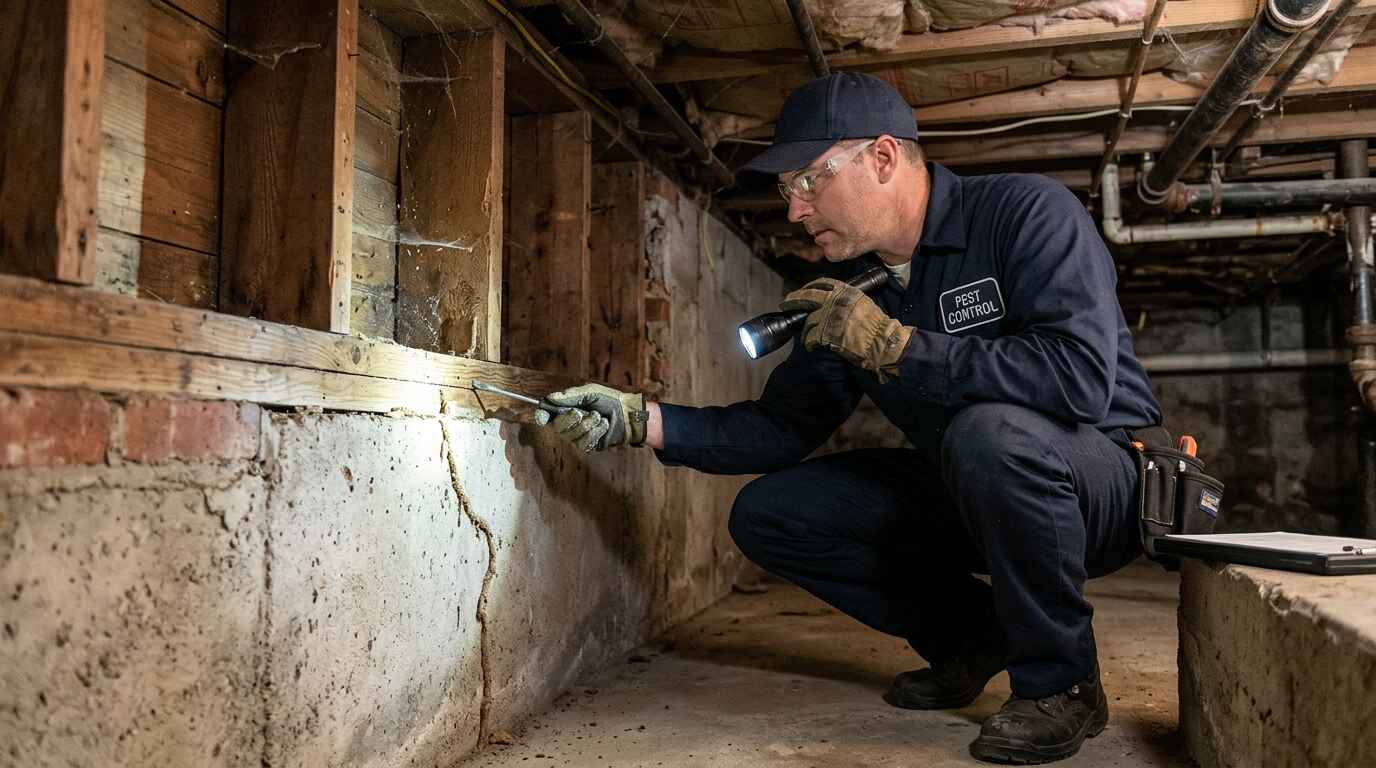
Along the Erie Canal near Newark’s Main Street, an older home can hide termite activity behind damp basement walls. One phone conversation gets the inspection or treatment plan sorted.
Plan
The right visit for the job
For canal-side houses, village homes, and orchard-country properties, the call usually starts with an inspection, then moves to targeted treatment when activity is found.
Quote
A straight quote
The exact quote is given on the call, based on activity, structure size, access, materials, and time on site.
Time
A visit time
The visit time is set on the call around access to the property and the treatment area.
Newark’s village homes near Main Street, canal-side properties, and houses along the Route 31 corridor present different termite checks. Basements, crawl spaces, porch framing, and older additions need separate attention, while orchard-country properties may have wider exterior access and more ground contact around the structure.
Services
Termite Control Services in Newark
Newark’s canal-town housing includes older framing, additions, porches, and basements where moisture can support termite-conducive conditions. Homes spreading toward Wayne County orchard land may have more exposed foundation and yard areas to inspect. The treatment plan depends on where activity is found, how accessible the structure is, and whether the job is residential, commercial, preventive, or damage-focused.
Residential termite control
Newark village homes, canal-side houses, and rural properties receive treatment planning based on foundation access, basements, crawl spaces, and visible activity.
Termite inspection
An inspection checks accessible Newark basements, porch framing, crawl spaces, utility areas, and exterior soil for termites and conducive conditions.
Wood-destroying insect report
A report documents accessible wood damage and termite evidence for Newark homes, including older properties near Main Street and surrounding farm roads.
Preventive termite treatment
Preventive planning helps Newark property owners address likely entry routes before moisture, soil contact, or concealed activity becomes a larger concern.
Subterranean termite treatment
Newark’s wet springs and freeze-thaw ground movement make foundation edges, basement walls, and soil contact important parts of subterranean termite treatment.
Commercial termite control
Commercial properties along Newark’s business corridors receive a treatment plan shaped by occupied areas, storage rooms, utility access, and operating schedules.
Termite damage assessment
A Newark damage assessment separates visible wood deterioration from termite evidence and identifies areas needing closer inspection or treatment planning.
Sizes
Termite Control Options Available in Newark
Most Newark jobs begin with a Termite Inspection because older village houses and rural properties can have several accessible and concealed risk areas. If activity is confirmed, the inspection findings determine whether targeted treatment or whole-home treatment fits.
| Size | Dimensions | Good for |
|---|---|---|
| Termite Inspection | A technician examines accessible areas for termites, conducive conditions, and evidence of damage. | This fits a Newark home near the canal, Main Street, or orchard country when there is no confirmed activity yet. The technician examines accessible areas, damage evidence, and conditions that may support termites. |
| Targeted Treatment | Treatment focuses on identified activity and accessible entry or nesting areas. | Targeted treatment suits a Newark property with identified activity at an accessible entry or nesting area, such as a foundation edge, basement section, porch, or addition. |
| Whole-Home Treatment | A coordinated treatment addresses active termite activity around the structure and likely entry routes. | Whole-home treatment fits confirmed activity affecting multiple areas or likely routes around a Newark structure. The plan coordinates accessible interior and exterior treatment areas around the building. |
Which option fits common Newark projects
| Project | Size | Why |
|---|---|---|
| Older village house | inspection | Older Newark homes may have additions, porches, and basement access points that need checking before treatment is selected. |
| Canal-side basement | targeted treatment | Moisture near the canal setting can make a known basement entry area suitable for focused treatment after inspection. |
| Orchard-country home | whole-home treatment | A larger Newark-area property may have several foundation and soil-contact routes requiring coordinated treatment. |
| Rental property turnover | inspection | An inspection documents accessible conditions and activity before a Newark landlord prepares an older house for occupancy. |
| Commercial storefront | targeted treatment | A confirmed problem near a Newark storefront, storage area, or utility room may be treated around occupied business space. |
Schedule Newark termite inspection
Click Here to Call (888) 510-9023Cost
What Affects Termite Control Cost in Newark
The exact quote is given on the call after the job is understood. Termite control cost depends on the treatment type and structure size, activity location, accessible areas, parts and materials, time on site, distance from Newark, and after-hours work.
To avoid surprise charges, describe the structure, suspected activity, access limits, and prior treatment on the call. The exact quote is reviewed before the termite treatment is scheduled.
Structure and activity
The size and construction of a Newark home or business, along with the type and extent of termite activity, affects the treatment plan and time on site.
Access from Newark
Distance, parking, narrow side access, finished basements, crawl spaces, and blocked utility areas can change the work required at canal-town or rural properties.
Parts and materials
Treatment materials and any parts needed for the selected approach affect cost, especially where foundation access, damaged wood, or entry routes require additional preparation.
Timing and conditions
After-hours work, wet ground, snow, freeze-thaw conditions, and difficult access around Newark properties can affect how the visit is planned and performed.
What goes in
Types of Work We Handle
Active Termite Infestations
This covers confirmed or suspected termite activity in accessible parts of Newark homes, businesses, basements, crawl spaces, and foundation edges, including older village properties.
Preventive Termite Protection
Preventive work addresses likely entry routes and conducive conditions before activity is confirmed, including homes near the Erie Canal and rural properties around Wayne County orchards.
Wood Damage Assessment
This covers accessible evaluation of wood damage and termite evidence, such as porch framing, sill areas, basement timbers, and older additions common in Newark.
Not accepted
Termite treatment does not cover unrelated plumbing, structural rebuilding, inaccessible concealed conditions, hazardous materials, or damage unrelated to wood-destroying insects.
How to protect your home in Newark
Describe the structure
Mention the home’s age, additions, basement or crawl space, and whether it sits near the canal or orchard country.
Report visible evidence
Have notes about mud tubes, discarded wings, damaged wood, moisture, or recent insect activity ready for the call.
Mention past treatment
Provide any prior inspection findings, treatment records, repairs, or known moisture problems affecting the Newark property.
Clear the work area
Move stored items away from basement walls, crawl-space entries, utility rooms, and other areas likely to need inspection.
Secure pets and people
Plan to keep pets and household members away from the treatment area while the technician examines and works.
Projects
Termite Control for Different Projects
Termite Inspection Control
Inspection control for Newark homes checks accessible structure areas, foundation edges, basements, crawl spaces, and exterior conditions before treatment is selected.
Subterranean Termite Control
Subterranean termite control in Newark focuses on soil contact, foundation routes, basement areas, and moisture conditions around the structure.
Drywood Termite Control
Drywood termite control examines accessible wood and concealed activity in Newark homes, additions, porches, and older interior framing.
Preventive Termite Control
Preventive termite control helps Newark property owners address likely entry routes and conditions before an active infestation becomes established.
Commercial Termite Control
Commercial termite control serves Newark storefronts, offices, storage areas, and other occupied properties with access and operating conditions considered.
Termite Damage Control
Termite damage control in Wayne County begins by separating active evidence from old deterioration and identifying areas needing treatment or further evaluation.
Termite Barrier Control
Barrier control plans for Newark properties address accessible routes around foundations, slabs, utility penetrations, and other likely entry points.
How it works
How Termite Control Works in Newark
Request An Inspection
Describe the Newark property, suspected signs, construction, access, and any previous treatment so the appropriate visit can be discussed.
Identify Termite Activity
The technician examines accessible areas for termites, conducive conditions, entry routes, and evidence of damage around the structure.
Review The Treatment Plan
Findings determine whether inspection, targeted treatment, or whole-home treatment fits the property and its accessible problem areas.
Protect The Structure
The selected treatment addresses identified activity and likely routes while the property owner keeps access clear for the planned work.
Weather in Newark
Newark’s wet springs can leave soil and foundation areas damp, while humid summers support conditions that deserve attention. Lake-effect snow and freeze-thaw cycles can limit exterior treatment timing, so the visit is planned around ground conditions and safe access.
Treatment area access
Work may involve crawl spaces, slabs, basements, utility rooms, foundation edges, and yards. Stored items, finished walls, narrow side yards, snow, wet ground, and blocked shutoffs can limit access at Newark village and rural properties.
Permits
Termite Control Permits and Placement Rules in Newark
Access rules
Termite treatment at a private Newark property generally does not require a street permit, but work affecting public space, excavation, or a building alteration may require review. The Village of Newark or Town of Arcadia can explain local requirements, and the call covers who is responsible for arranging any needed approval or inspection.
Landlord and HOA requirements
Covenants, landlord rules, or property management requirements may control treatment access, notice, exterior work, or documentation in Wayne County. Newark landlords and tenants should confirm those rules before the visit.
What the work area needs
Clear access to the suspected activity, foundation edges, crawl-space entries, utility rooms, and shutoffs. Provide practical parking for the work vehicle, keep pets and people away, and account for snow, wet ground, or frozen soil around Newark properties.
Timing
Seasons, Weather and the Best Time to Call in Newark
Termite concerns in Newark often become easier to notice during spring thaw and wet spring conditions, when soil contact and damp foundations are exposed. Humid summer weather can keep conducive conditions active. Lake-effect snow and freeze-thaw cycles may restrict exterior work, while indoor inspections can still depend on clear basement, crawl-space, and utility access.
Spring thaw and moisture
As Newark ground thaws, check foundation edges, basement walls, porch supports, and other soil-contact areas for moisture, mud tubes, or damaged wood before treatment planning.
Summer activity and access
Humid Newark summers can keep activity and conducive conditions noticeable, but treatment still depends on clear access, dry working areas, and the condition of exterior ground.
Plan termite treatment in Newark
Click Here to Call (888) 510-9023Service area
Termite Control Areas We Serve
Service covers Newark village, the Main Street area, properties near the Erie Canal, the north and south sides of town, and homes along the Route 31 and Route 88 corridors. Coverage also reaches surrounding Wayne County orchard-country properties and nearby rural roads, with access and distance reviewed on the call.
Newark is part of our Wayne County coverage, and we also serve the neighboring communities below.
Why us
Why Call a Termite Control in Newark?
Newark’s canal-town housing often combines older foundations, additions, porches, and basement spaces. A termite visit has to account for those connected areas rather than treating one visible spot as the whole problem.
Orchard-country properties around Newark may have wider yards and more foundation exposure, but wet springs, humid summers, snow, and freeze-thaw movement change exterior access. The treatment plan is built around the structure and current ground conditions.
FAQs
Termite Control FAQs
How much does termite control cost in Newark?
The exact quote is given on the call. Cost depends on the structure and treatment type, activity location, access, parts and materials, time on site, distance, and after-hours work. Have the property address, building size, signs of activity, and access limits ready.
Which termite visit fits my Newark property?
A Termite Inspection usually fits when activity is suspected but not confirmed. Targeted treatment suits identified activity in an accessible area, while whole-home treatment addresses activity and likely routes around the structure. Older Newark houses with additions often need the inspection first.
How soon can someone inspect termites in Newark?
The visit time is set on the call after the property and access are discussed. Ask about same-day or next-day availability if the situation is urgent, and mention whether the problem is in a basement, crawl space, business, or occupied home.
What does Newark termite treatment cover?
Treatment addresses identified termite activity and accessible entry or nesting areas, with the selected scope based on the inspection. Newark properties may require attention at foundation edges, basement spaces, porch framing, slabs, utility areas, and exterior soil contact.
What does termite control not cover?
It does not cover unrelated plumbing, structural rebuilding, hazardous materials, inaccessible concealed conditions, or damage unrelated to wood-destroying insects. A Newark property owner should describe water damage, remodeling, and blocked areas so the scope is clear.
Does termite treatment in Newark need a permit or inspection?
Many private termite treatments do not require a street permit, but excavation, public-space work, or building alterations may require local review. The Village of Newark or Town of Arcadia can explain requirements, and the call covers who arranges any needed approval or inspection.
How much access is needed for Newark termite treatment?
Access is needed to the suspected activity and may include basements, crawl spaces, slabs, utility rooms, foundation edges, and yards. Move stored items, identify shutoffs, provide work-vehicle parking, and keep pets and people clear of the treatment area.
What should I have ready when calling about termites?
Have the Newark property address, structure type, approximate size, suspected signs, photos or notes, basement or crawl-space details, prior treatment history, and access restrictions ready. Mention whether the property is near the canal, on rural land, or used commercially.
Can Newark weather delay exterior termite treatment?
Yes, wet springs, lake-effect snow, humid conditions, and freeze-thaw cycles can limit exterior treatment timing or access. Interior inspection may still depend on safe, clear basement and crawl-space access, so current ground and weather conditions should be discussed on the call.
Do canal-side Newark homes need a different termite inspection?
Canal-side homes may need closer attention to damp basements, foundation edges, porch supports, and soil contact, but the correct scope depends on the structure and evidence found. An inspection distinguishes termite activity from ordinary moisture-related wood deterioration.