Termite Control in Whitinsville, MA
Older mill housing around Whitinsville village often puts termite work behind dense foundations, finished basements, and tight crawlspaces. One phone call gets the right termite treatment sorted for the structure.
Plan
The right visit for the job
Mill village homes near Main Street commonly need an inspection first, while visible activity around a basement or crawlspace may fit a targeted treatment.
Quote
A straight quote
The quote is given on the call and changes with structure size, activity, access, materials, distance, and after-hours work.
Time
A visit time
The visit time is set on the call around access to the home, work area, and occupants.
From Whitinsville village and the Main Street mill area to homes near Church Street, Providence Road, and the Blackstone River, termite work varies by foundation and access. Older stone and masonry foundations need careful inspection, while newer Worcester County homes may need attention around slabs, utility entries, and yard soil.
Services
Termite Control Services in Whitinsville
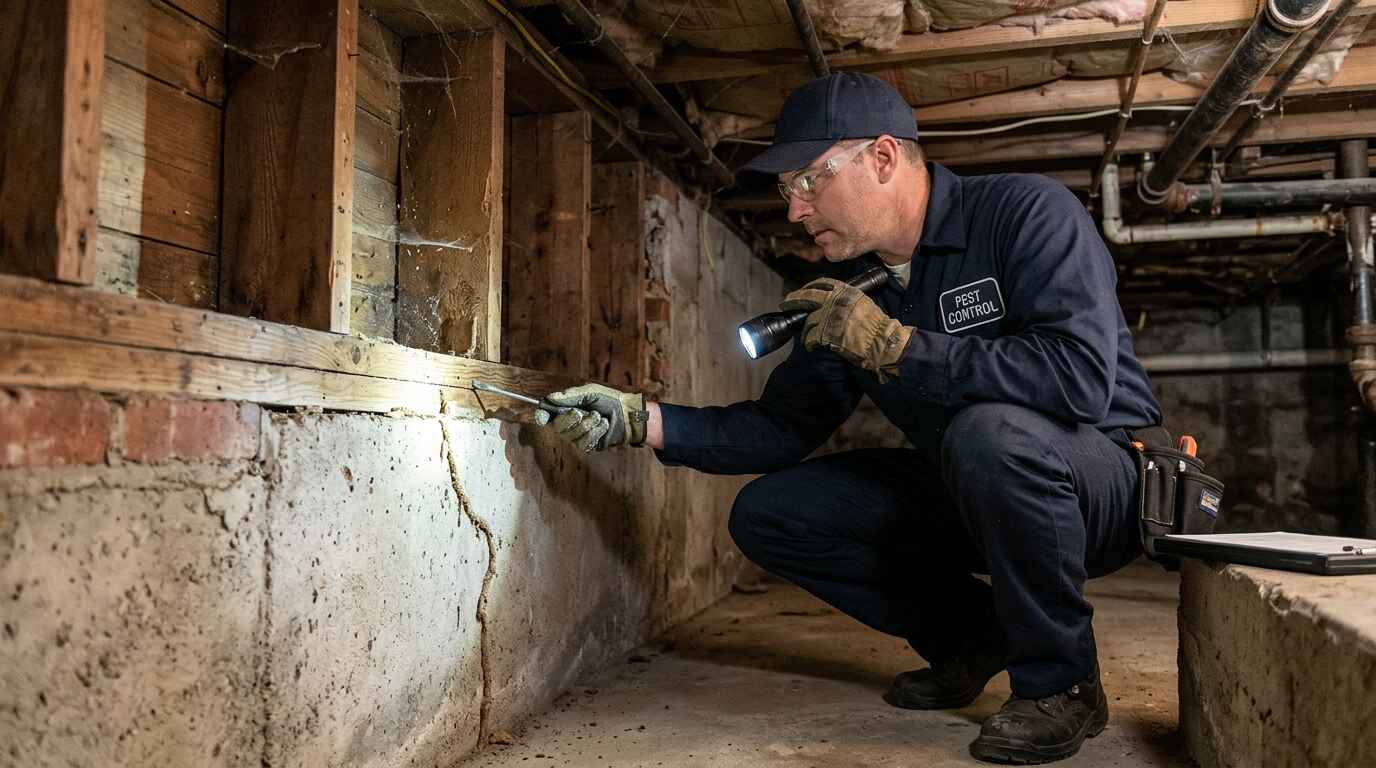
Whitinsville's mill village housing brings older foundations, enclosed basements, and additions built at different times. Homes along the Blackstone River corridor can also have damp areas that make access and conducive conditions worth checking. The work may involve crawlspaces, basement edges, slab penetrations, utility rooms, and soil beside the structure, rather than just visible wood.
Residential termite control
Residential work in Whitinsville examines basement edges, crawlspaces, porches, and additions where older construction creates connected entry routes.
Termite inspection
An inspection checks accessible areas around Whitinsville village homes for termites, conducive conditions, and evidence of damage.
Wood-destroying insect report
A wood-destroying insect report documents accessible findings for a Whitinsville property, including foundation areas and exposed structural wood.
Preventive termite treatment
Preventive treatment helps address likely entry routes around homes near Church Street, especially where soil meets older masonry or additions.
Subterranean termite treatment
Subterranean termite treatment focuses on soil-to-structure routes, basement edges, and crawlspaces common in Whitinsville's older housing.
Commercial termite control
Commercial service covers mill-area buildings, offices, and other Worcester County properties where access, occupants, and multiple work areas must be coordinated.
Termite damage assessment
A damage assessment separates visible wood deterioration from termite evidence in Whitinsville basements, porches, framing, and crawlspace supports.
Sizes
Termite Control Options Available in Whitinsville
The most common Whitinsville job starts with a Termite Inspection because mill village foundations, later additions, and finished basement walls can hide separate conditions. A targeted treatment fits confirmed activity in accessible areas, while broader activity or several entry routes may require whole-home treatment.
| Size | Dimensions | Good for |
|---|---|---|
| Termite Inspection | A technician examines accessible areas for termites, conducive conditions, and evidence of damage. | This fits a Whitinsville home with suspected activity, mud tubes, damaged wood, or damp basement conditions where the technician needs to examine accessible areas before recommending treatment. |
| Targeted Treatment | Treatment focuses on identified activity and accessible entry or nesting areas. | A targeted treatment suits identified activity near a basement, crawlspace, porch, or utility entry, such as one accessible route in an older Main Street property. |
| Whole-Home Treatment | A coordinated treatment addresses active termite activity around the structure and likely entry routes. | A whole-home treatment fits active termite activity around a larger structure, multiple additions, or several likely entry routes at a Whitinsville village or river corridor property. |
Which option fits common Whitinsville projects
| Project | Size | Why |
|---|---|---|
| Older mill home | inspection | Dense foundations and enclosed basement areas can hide activity, so accessible conditions should be checked before choosing treatment. |
| Basement mud tubes | targeted treatment | Visible activity along one accessible foundation route may fit focused treatment after the surrounding area is examined. |
| Crawlspace activity | targeted treatment | A defined crawlspace entry route can often be addressed directly, subject to clearance and the condition of the space. |
| Multiple additions | whole-home treatment | Connected additions create more possible routes, making coordinated treatment more suitable than addressing one visible spot alone. |
| Commercial mill building | whole-home treatment | Large or divided structures near Whitinsville's mill area may have separate foundations, work areas, and activity paths to coordinate. |
Schedule termite treatment in Whitinsville
Click Here to Call (888) 510-9023Cost
What Affects Termite Control Cost in Whitinsville
The exact quote is given on the call after discussing the structure and suspected activity. Cost depends on the treatment type and size of the job, parts and materials, time on site, distance, access, and after-hours work.
To avoid surprise charges, describe the structure, visible evidence, access limits, and prior treatment on the call. The exact quote is given before the termite treatment is scheduled.
Structure and activity
The building's size, foundation layout, number of activity areas, and whether termites are active or only suspected affect the work selected.
Access from Whitinsville
Tight crawlspaces, finished basements, blocked utility rooms, and difficult parking around older village properties can increase time on site and access work.
Parts and materials
Treatment materials and any needed parts depend on the entry route, foundation conditions, soil contact, and the selected termite treatment.
Timing and distance
The visit setting, distance from Whitinsville, after-hours work, and coordination with occupants or commercial staff can change the quoted cost.
What goes in
Types of Work We Handle
Active Termite Infestations
This covers termite activity identified around foundations, crawlspaces, basements, slabs, or structural wood, including a typical Whitinsville mill village basement with visible entry evidence.
Preventive Termite Protection
This covers treatment planning for likely entry routes around homes, additions, and utility penetrations where no active infestation has been confirmed.
Wood Damage Assessment
This covers examination of accessible wood and structure to help distinguish termite evidence from moisture damage, age, or deterioration in older Worcester County homes.
Not accepted
The service does not cover inaccessible concealed conditions, unrelated structural repairs, general moisture correction, or materials and items outside the agreed termite work.
How to protect your home in Whitinsville
Clear the foundation
Move stored items away from basement edges, crawlspace openings, and accessible foundation walls before the inspection.
Keep pets away
Keep pets and occupants clear of the work area while the technician examines or treats the structure.
Share prior records
Have previous inspection reports, treatment details, and known repairs ready when discussing the property.
Expose utility access
Make basement, crawlspace, slab, and utility entry areas reachable without moving heavy stored materials.
Report visible evidence
Note mud tubes, discarded wings, damaged wood, moisture, and the locations where signs were first noticed.
Projects
Termite Control for Different Projects
Termite Inspection Control
Inspection control for Whitinsville homes checks accessible foundations, basements, crawlspaces, additions, and exposed wood before treatment is selected.
Subterranean Termite Control
Subterranean control addresses soil-to-structure routes around Whitinsville foundations, including basement edges and crawlspaces near the Blackstone River.
Drywood Termite Control
Drywood termite control focuses on activity in accessible wood and framing, with the treatment plan based on findings rather than soil contact.
Preventive Termite Control
Preventive control helps property owners near Church Street address likely entry areas before activity becomes established in older construction.
Commercial Termite Control
Commercial control serves mill-area buildings and Worcester County businesses where occupants, divided foundations, and work access require planning.
Termite Damage Control
Damage control assesses affected wood in Whitinsville basements, porches, crawlspaces, and additions while separating termite evidence from moisture deterioration.
Termite Barrier Control
Barrier control focuses on likely entry routes around slabs, foundations, utility penetrations, and soil beside Whitinsville structures.
How it works
How Termite Control Works in Whitinsville
Request An Inspection
Describe the Whitinsville property, foundation type, visible signs, previous treatment, and the areas that are difficult to reach.
Identify Termite Activity
The technician examines accessible areas for termites, conducive conditions, entry routes, and evidence of damage around the structure.
Review The Treatment Plan
The recommended treatment explains the affected areas, access needs, materials, and whether focused or coordinated work fits the property.
Protect The Structure
Treatment addresses the selected activity and entry routes, with the work area kept clear for safe access around the home.
Weather in Whitinsville
Whitinsville's snowy winters can cover soil and complicate exterior access, while spring thaw can leave rocky ground wet and uneven. Humid summers may increase moisture concerns around basements and crawlspaces. The technician sets the visit around conditions that allow the affected areas to be examined and treated properly.
Treatment area access
Work may occur in crawlspaces, basement edges, slabs, utility rooms, and soil beside the structure. Older Whitinsville foundations can have narrow passages, low clearance, finished walls, stored belongings, or additions that limit access. Clear routes, exposed inspection areas, and safe parking help the technician reach the suspected entry points.
Permits
Termite Control Permits and Placement Rules in Whitinsville
Access rules
Most termite treatments are performed on private property and do not require a street permit, but unusual placement, public access, or local inspection questions should be checked with the Town of Northbridge. The call covers what local approval may apply and who is responsible for arranging it.
Landlord and HOA requirements
Worcester County landlords, condominium associations, and property covenants may require notice before treatment, access to shared foundations, or documentation for the property file. Have those rules available when the visit is arranged.
What the work area needs
The work area needs clear access to the suspected activity, foundation, crawlspace, utility room, and any needed shutoffs. Provide parking for the work vehicle, keep people and pets clear, and account for snow, thawed ground, and wet conditions around Whitinsville properties.
Timing
Seasons, Weather and the Best Time to Call in Whitinsville
Termite concerns in Whitinsville often come to light during spring thaw, when damp foundations and shifting soil make signs easier to notice. Humid summers can keep crawlspaces and basement edges favorable to activity. Snowy winter conditions may limit exterior inspection areas, while indoor evidence can still be examined when access is clear.
Spring thaw and access
Thawing ground around older Whitinsville foundations can be rocky, wet, and uneven. Clear snowmelt from access paths and mention drainage or basement moisture before the technician chooses treatment areas.
Humid summer conditions
Humid summers can make crawlspaces and basement edges more important to inspect, especially around additions and older masonry. Keep stored items away from walls so accessible activity and conditions can be evaluated.
Book a Whitinsville termite inspection
Click Here to Call (888) 510-9023Service area
Termite Control Areas We Serve
Service covers Whitinsville village, the Main Street mill area, Church Street, Providence Road, homes near the Blackstone River, and residential roads on the surrounding sides of town. Nearby service can also be discussed for Northbridge, Foxboro, Sharon, Coventry, and Brookline when the property location is ready.
Whitinsville is part of our Worcester County coverage, and we also serve the neighboring communities below.
Why us
Why Call a Termite Control in Whitinsville?
Whitinsville's mill village homes often combine older masonry foundations with porches, additions, and finished lower levels. That layout can split termite activity between areas, so a technician needs to inspect more than the first visible sign.
Rocky glacial soils, spring thaw, and humid summers affect how exterior foundation routes and crawlspaces are reached. Local treatment planning accounts for wet ground, narrow access, and the dense construction found around the village.
FAQs
Termite Control FAQs
How much does termite control cost in Whitinsville?
Termite control cost in Whitinsville depends on the structure size, activity, treatment type, access, materials, time on site, distance, and after-hours work. The exact quote is given on the call. Older mill village foundations and finished basements can require more inspection access than an open foundation.
Which termite visit fits my Whitinsville home?
A Termite Inspection fits most Whitinsville homes when activity is suspected but the treatment area is unclear. Targeted treatment suits identified activity in an accessible area, while whole-home treatment may fit multiple routes, additions, or activity around the structure.
How soon can someone come to Whitinsville?
The visit time for Whitinsville is set on the call after the property, access, and urgency are discussed. Same-day or next-day availability can be asked about, but timing depends on the schedule, weather, and whether the work area can be reached.
What does termite treatment cover in Whitinsville?
Termite treatment covers the agreed activity and accessible entry or nesting areas around the structure. Depending on the treatment, work may involve basements, crawlspaces, slabs, utility rooms, foundation edges, or nearby soil. The treatment plan is reviewed before scheduling.
What does termite control not cover?
Termite control does not cover inaccessible concealed conditions, unrelated structural repairs, general moisture correction, or work outside the agreed treatment. A Whitinsville property with old wood damage may need separate repair work after the termite evidence is assessed.
Do Whitinsville termite treatments need permits or inspections?
Most termite treatments on private property do not need a street permit, but unusual access, public areas, or local inspection questions should be checked with the Town of Northbridge. The call covers what approval may apply and who arranges it.
How much access is needed for termite work?
The technician needs a clear route to the suspected activity, foundation, crawlspace, basement, slab, or utility room. Move stored items, identify shutoffs, provide work vehicle parking, and keep people and pets away from the area during the Whitinsville visit.
What should I have ready when calling about termites?
Have the Whitinsville property address, foundation type, visible signs, activity locations, prior treatment details, access limits, and preferred visit conditions ready. Photos or inspection records can help explain whether the concern is near a basement, crawlspace, porch, or addition.
Can Whitinsville weather affect termite treatment?
Yes, snow, spring thaw, rocky wet soil, and humid summer conditions can affect exterior access and crawlspace inspection. Indoor evidence may still be examined, but the visit is set around safe access to the foundation and treatment areas.
Are mill village homes in Whitinsville harder to inspect?
They can be, because older mill village homes may have dense masonry foundations, enclosed basements, porches, and later additions. Those connected areas can create more than one possible entry route, so an inspection should include every accessible section rather than only the first visible sign.